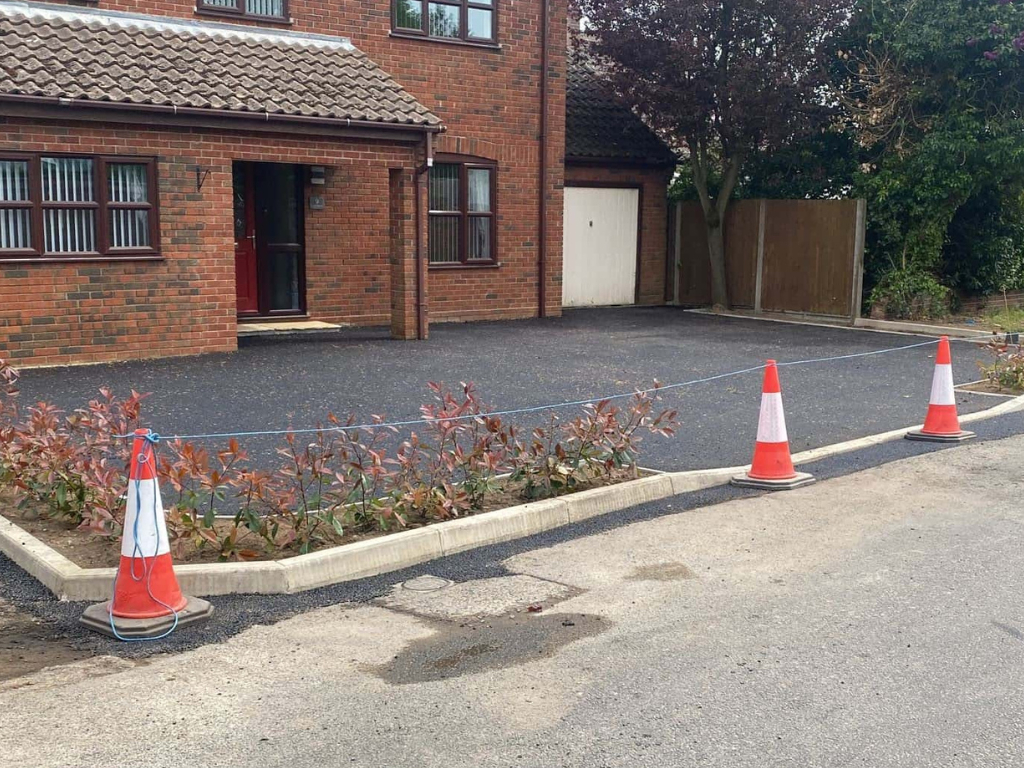
Tarmac Driveway Showing Wear? How to Decide Between Repair and Resurfacing
Tarmac is a dependable driveway material, but regular vehicle use, changing temperatures and water exposure will gradually affect its condition. Small cracks, faded areas and isolated surface damage do not always mean that the entire driveway needs resurfacing. Equally, repeatedly patching a surface with widespread deterioration may provide only a short-term improvement.
For property owners in Newmarket, Suffolk, the right solution depends on the type of damage, how much of the driveway is affected and whether the supporting base remains stable.
Repair or Resurface: What Should You Consider?
When Is a Localised Repair Suitable?
A repair is often appropriate when deterioration is limited to one or two clearly defined areas. Examples include a short crack, a small damaged edge or an isolated depression caused by local movement.
The surrounding tarmac should remain firm and securely bonded. If the wider surface is stable, the damaged material can be removed and repaired without disturbing the rest of the driveway.
How Extensive Is the Cracking?
The pattern of cracking provides useful information about the condition beneath the surface. A small number of isolated cracks may result from normal wear or minor movement and can often be repaired individually.
Interconnected cracks across several areas can indicate more general deterioration. If water has entered repeatedly or the base is moving, filling each visible crack may not prevent new ones from forming nearby.
Are Potholes Appearing?
One small pothole can sometimes be repaired by removing loose material, preparing the damaged section and installing new tarmac. The edges of the repair must connect securely with the existing surface.
Several potholes or recurring failures may indicate that the upper layer has weakened more broadly. Resurfacing may provide a more consistent solution if the supporting base is still suitable.
Does the Driveway Have Sunken Areas?
A shallow depression does not always mean the complete surface has failed. Local settlement may be repairable if its cause is confined to a small section.
However, dips appearing across the driveway can suggest inconsistent compaction or movement within the underlying construction. Resurfacing alone will not correct an unstable base, so the cause must be assessed before new material is laid.
Is Water Collecting on the Surface?
Standing water may result from a local low point, blocked drainage or unsuitable levels. Persistent pooling can accelerate surface deterioration by allowing moisture to enter cracks and weakened edges.
A small depression may be corrected through local repair. If water collects in several areas, resurfacing with carefully prepared levels may be more suitable, provided the underlying drainage and base are functioning correctly.
Are the Edges Breaking Away?
Driveway edges can deteriorate when they lack support or are repeatedly driven over. Early damage may be confined to a short section and repaired before it spreads further into the surface.
Widespread edge failure may require more extensive preparation. Renewing the surface without improving the edge support could allow the same problem to return.
Has the Surface Become Loose or Ravelled?
Ravelling occurs when aggregate begins loosening from the tarmac surface. Minor deterioration in a limited area may be repairable, but widespread loose material indicates that the surface layer is losing cohesion.
Where the base remains stable, resurfacing can restore a continuous and durable upper layer. The existing surface must first be cleaned and prepared so that the new material bonds correctly.
Is the Driveway Faded but Structurally Sound?
Colour fading is a normal result of weather exposure and does not necessarily mean that the driveway has failed. If the surface remains firm, level and free from significant cracking, structural repair may not be required.
Resurfacing should be considered for functional reasons rather than colour alone. A professional assessment can distinguish between cosmetic ageing and deterioration affecting performance.
What Does Resurfacing Involve?
Tarmac resurfacing involves preparing the existing driveway and installing a new surface layer over a suitable base. Damaged sections, loose material and level problems must be addressed before the new tarmac is applied.
Preparation is essential because a new layer will follow weaknesses beneath it. When completed over a stable foundation, resurfacing can restore an even finish and improve the driveway’s everyday performance.
When Is Resurfacing Not Enough?
Resurfacing is not intended to conceal serious movement or widespread base failure. If the driveway has deep settlement, extensive deformation or recurring damage across the same areas, more substantial reconstruction may be necessary.
The surface and foundation should therefore be assessed together. This avoids installing new tarmac over problems that are likely to reappear.
Why Repeated Patching Can Become Ineffective
Local repairs are valuable when the damage is genuinely isolated. Problems arise when separate patches accumulate across much of the driveway.
Each patch introduces additional joints, and the untreated areas may continue deteriorating between them. At this stage, resurfacing can create a more consistent upper layer, assuming the existing base remains dependable.
The Importance of Professional Assessment
Repair and resurfacing serve different purposes. Repair targets specific defects, while resurfacing renews a worn but fundamentally stable driveway.
A professional contractor will examine cracking patterns, drainage, levels, edge support and the condition of the base. This helps ensure that the recommended work addresses the source of deterioration rather than only improving its appearance.
Conclusion
Localised repairs are often suitable for isolated cracks, small potholes and limited edge damage. Resurfacing may be the better option when wear affects much of the driveway but the supporting base remains sound. Where the foundation has failed, the underlying problem must be corrected before a new surface is installed.
Newmarket Driveway Surfacing provides professional tarmac driveway repairs and resurfacing in Newmarket, Suffolk. If your driveway is showing signs of wear, contact our team to arrange an assessment and determine the most appropriate solution.
BLOG POST
Call us on: 01638 591 795
Click here to find out more about Newmarket Driveway Surfacing
Click here to complete our contact form and see how we can help with your driveway needs.